Author

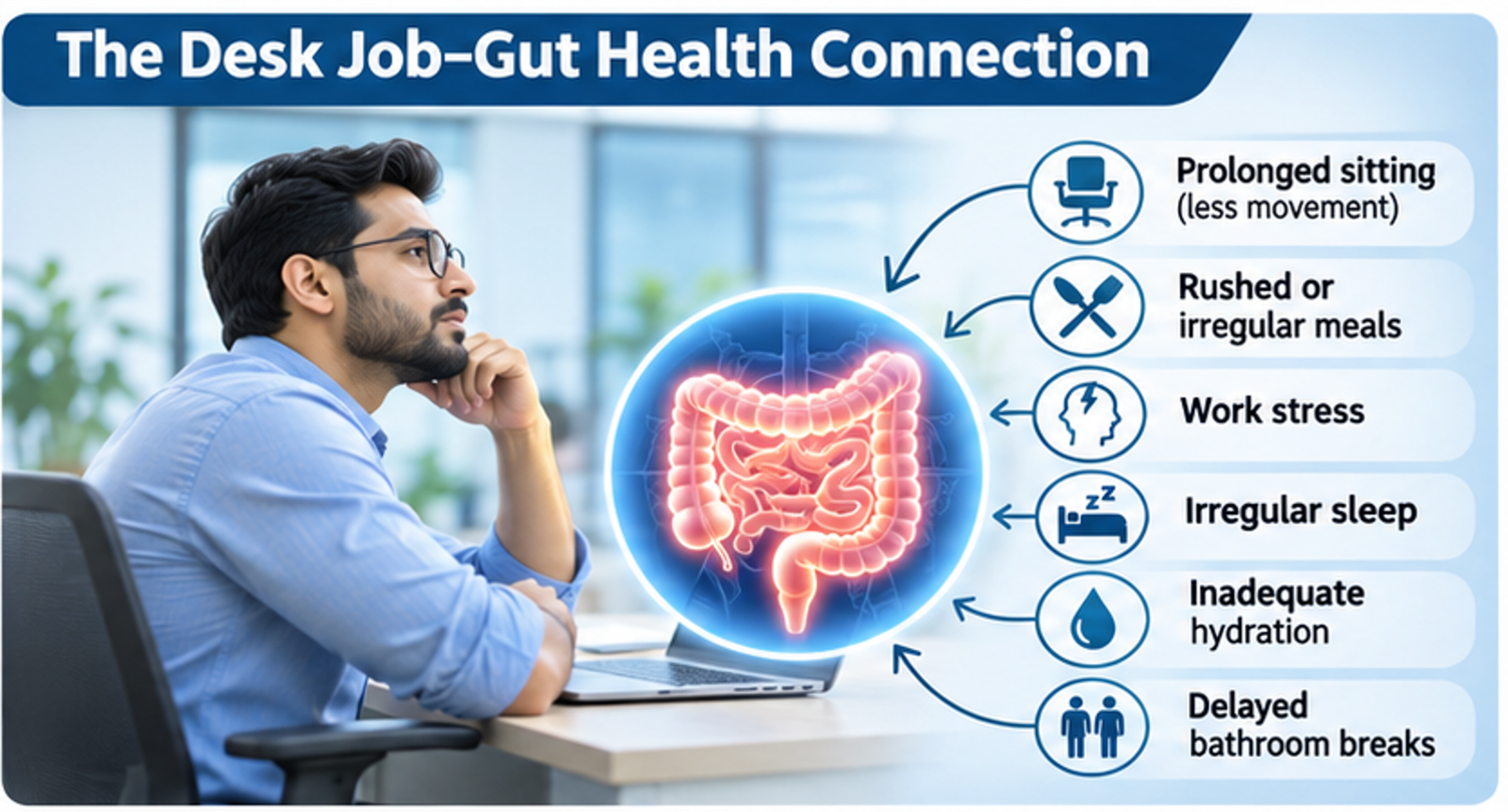
Quick answer: A desk job does not automatically cause poor gut health. But long periods of sedentary behavior often come with less movement, rushed meals, delayed bathroom breaks, stress, and irregular sleep—all of which can make it harder to maintain comfortable routines. Research links sedentary behavior with IBS risk, but does not prove that sitting alone causes digestive symptoms.¹
Why desk jobs can be tough on your gut
How long hours of sitting may affect digestion
The digestive tract keeps working while you sit. Sitting for eight to ten hours does not switch off digestion, and it has not been shown to slow bowel movements in every desk worker. But a workday spent mostly seated can leave less time for walking, regular meals, hydration, or responding to the urge to use the bathroom.
A large prospective study followed 362,193 UK Biobank participants. Among 345,388 people without IBS at baseline, 19,885 new cases were recorded over a median follow-up of 8.45 years. More sedentary behavior was associated with increased IBS risk, while physical activity was associated with lower risk. These findings are important, but they do not prove that sitting causes IBS: the study was observational, the behaviors were self-reported, and its participants were not a sample of office workers alone.¹
The practical takeaway is measured: prolonged sitting may be part of a broader lifestyle pattern associated with digestive symptoms, but it is not a diagnosis or a guaranteed cause. A person’s symptoms can also be influenced by diet, stress, sleep, medications, and underlying health conditions.
Sedentary behavior, microbiota diversity, and metabolic risk
The gut microbiota is the community of microorganisms living in the digestive tract. Studies of physical activity and the microbiota suggest a possible connection, but they do not establish that sitting at a desk directly damages the microbiome.
A systematic review of 18 studies in healthy adults found that higher physical activity or cardiorespiratory fitness was associated with greater bacterial alpha diversity—the variety of bacteria within a sample—and higher concentrations of some short-chain fatty acids. However, results from exercise interventions were inconsistent, and the authors noted that stronger studies were needed.² A separate review of 17 human studies also found varied outcomes, including differences in particular bacterial groups, rather than a consistent effect on overall diversity.³
Most of this research measures bacteria. It provides much less information about whether sedentary behavior changes the gut’s fungi or other microorganisms. It is therefore premature to claim that sitting all day causes “dysbiosis” or a particular gut imbalance.
Common gut issues in desk-based professionals
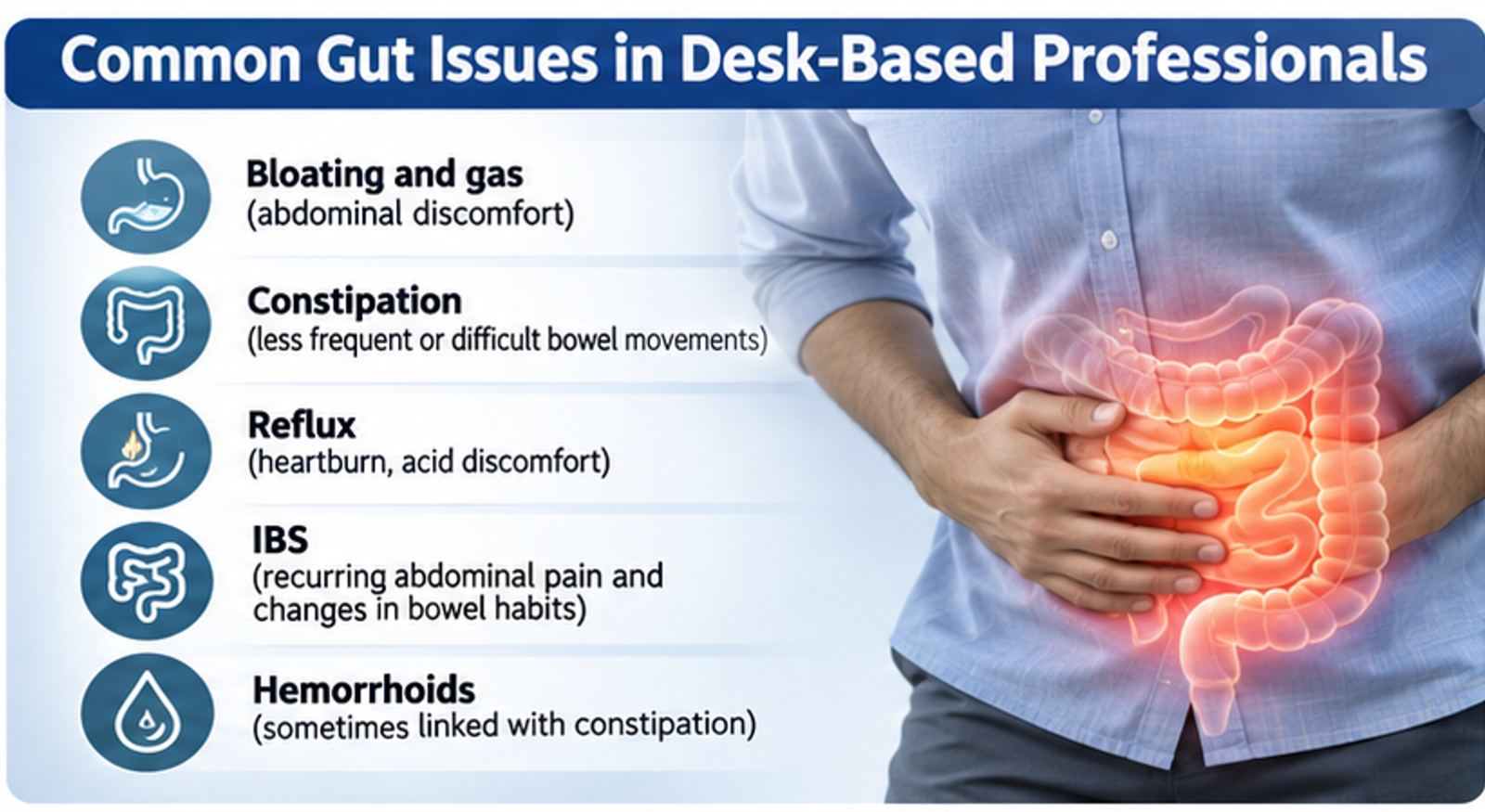
Bloating, gas, constipation, and reflux
Bloating, abdominal discomfort, constipation, and changes in bowel habits are symptoms—not proof of a “damaged microbiome.” IBS is a disorder of gut–brain interaction associated with recurring abdominal pain and changes in bowel habits; it should not be self-diagnosed from a single symptom.⁶
Work routines can make it harder to notice or respond to the body’s signals. Some people delay bathroom breaks, eat quickly between meetings, or rely on irregular meals. These patterns may be worth addressing, but not every symptom in an office worker is caused by the job.
Reflux can also be uncomfortable during the workday. In a meta-analysis of 33 studies including 242,850 participants, physical activity was associated with lower prevalence of symptomatic gastroesophageal reflux and gastroesophageal reflux disease (GERD). The results do not show that sitting at work itself causes reflux, nor do they prove that exercise will treat an individual’s symptoms.⁹
Hemorrhoids, IBS, and functional symptoms
Constipation and hemorrhoids can occur together. A systematic review and meta-analysis found that functional constipation was more prevalent among people with hemorrhoids than among controls (odds ratio, 2.09; 95% CI, 1.27-3.44). This does not demonstrate that sitting alone causes hemorrhoids.⁷
If bowel symptoms are recurring, severe, or affecting daily life, a clinician can help assess possible causes. Symptoms that resemble IBS can overlap with other conditions, and an appropriate assessment matters.⁶
The microbiome story: What happens when you sit all day?
What studies say about sitting and gut bacteria
There is a research signal: physical activity and cardiorespiratory fitness have been associated with differences in gut bacteria and microbial products.²,³ But the evidence is not strong enough to promise that short office breaks will increase “good bacteria,” restore diversity, or prevent disease. Studies differ in how they measure activity and the microbiome, and diet and other lifestyle factors can affect results.²,³
The fungal part of the gut microbiota is even less understood in relation to desk work. Current evidence does not establish that sitting changes a person’s gut fungi.
Energy, mood, and productivity: Avoiding overclaims
Gut symptoms can be distracting and uncomfortable, but there is no simple, established formula in which a particular microbiome profile predicts a desk worker’s energy or productivity. The gut and brain communicate in both directions, and stress can influence gut sensitivity and pain.¹⁰ For people with IBS, disturbed sleep has also been associated with worse gastrointestinal distress and abdominal pain.¹¹
That is a reason to take symptoms seriously—not a reason to blame every tired afternoon on the microbiome.
Practical gut-friendly habits for the workday
Try movement snacks, walking calls, and stretches
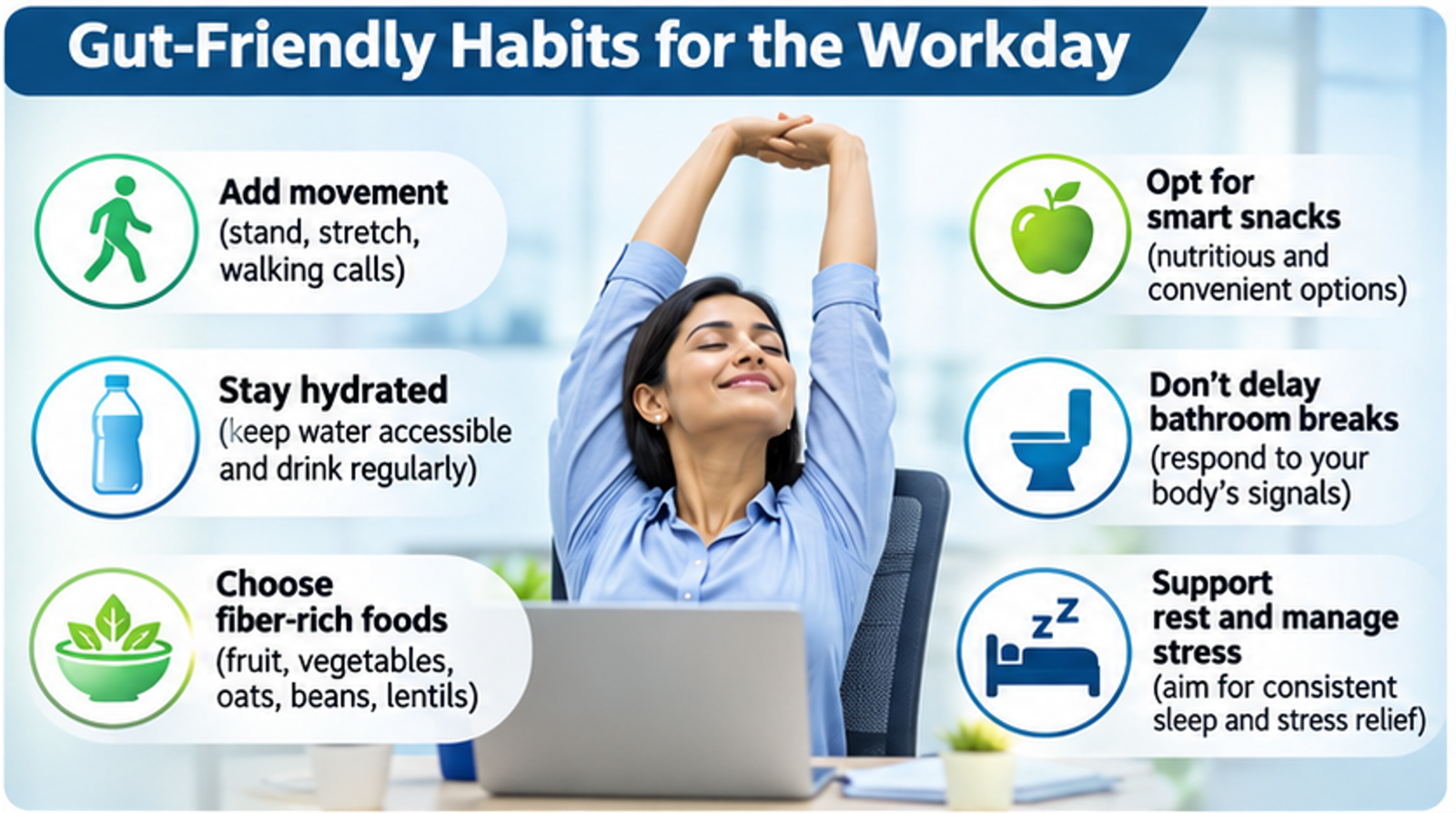
Start with habits you can sustain: stand up between tasks, take a brief walk during a call, use the stairs when appropriate, or stretch after a long meeting. These are practical ways to add movement, not a proven prescription for treating constipation or IBS.
There is limited experimental evidence that movement can affect gas symptoms. In a small study of eight people with bloating, intermittent light pedaling during an intestinal gas-infusion test was associated with lower gas retention than resting (24% vs 45%) and a lower symptom score (2.8 vs 3.6). The study was small and does not show that a quick office walk will treat chronic bloating.⁴
A separate randomized trial assigned 102 people with IBS to increased physical activity or usual lifestyle; 75 completed the study. The IBS symptom-severity score improved more in the activity group than in the control group (a median decrease of 51 vs 5 points; P = .003). This supports considering physical activity as part of IBS care, but it is not evidence that micro-breaks alone produce the same effect.⁵
Make hydration, fiber, and snacks easier
Build meals and snacks around foods that fit your needs and routine. Convenient options may include fruit, vegetables, oats, whole-grain foods, beans, or lentils. If increasing fiber, do so gradually; a sudden increase can be uncomfortable for some people.
In a systematic review and meta-analysis of randomized trials in adults with chronic constipation, fiber supplementation increased stool frequency by an average of 1.19 bowel movements per week across 12 studies. Results varied considerably among studies, so fiber does not work the same way for everyone.⁸ If symptoms persist, ask a clinician about suitable options, including whether a fiber supplement is appropriate.
Keep water accessible and drink regularly, especially when thirsty or in hot conditions. More water is not a universal fix for constipation, and people with a medical fluid restriction should follow their care team’s advice. Try to avoid routinely eating at your desk in a rush, and allow time to use the bathroom when you feel the urge.
Beyond the office: Sleep, stress, and the gut–brain axis
Stress and digestive symptoms can interact. Research reviews describe ways stress may affect gut sensitivity, pain processing, and gastrointestinal function, while also emphasizing that IBS has no single cause.¹⁰
Sleep may matter, too. In a study that monitored sleep over seven days, awakenings during the night predicted worse abdominal pain and gastrointestinal distress the following day among participants with IBS. The sample was small, so this does not mean poor sleep explains every flare—or that improving sleep alone will resolve symptoms.¹¹
Aim for routines that support rest and make work breaks possible. If stress or sleep problems are persistent, consider discussing them with a health care professional rather than assuming they are “just part of office life.”
When to see a gastroenterologist
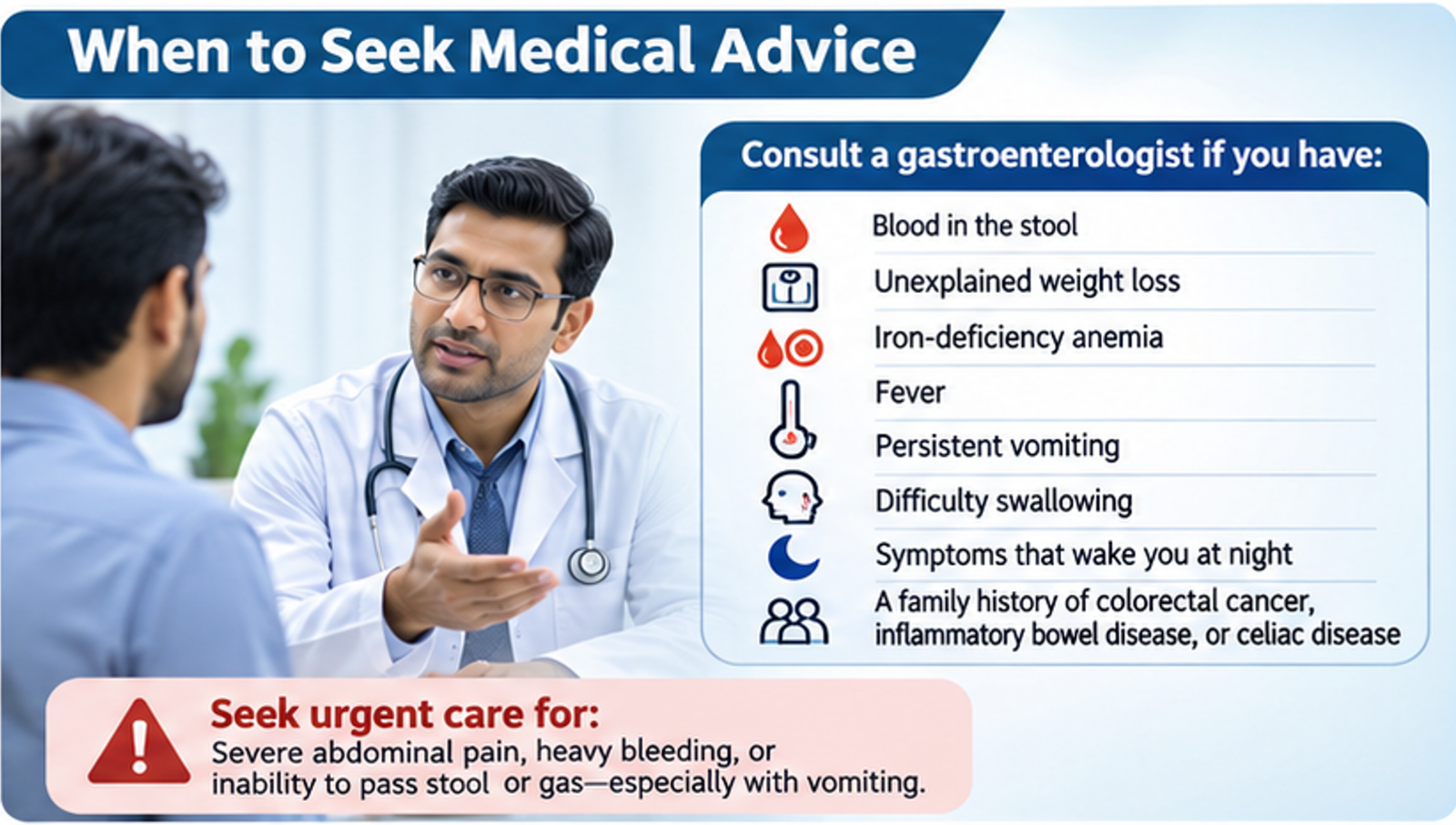
Seek medical advice for persistent or worsening digestive symptoms, or if they interfere with eating, sleep, or daily activities. Get prompt clinical assessment for warning signs such as blood in the stool, unexplained weight loss, iron-deficiency anemia, fever, persistent vomiting, difficulty swallowing, symptoms that wake you at night, or a relevant family history of colorectal cancer, inflammatory bowel disease, or celiac disease.⁶
Severe abdominal pain, heavy bleeding, or an inability to pass stool or gas—especially with vomiting—warrants urgent assessment. Do not assume that a red-flag symptom is caused by sitting, stress, or a “microbiome imbalance.”
FAQs
How does sitting for 8–10 hours a day really affect gut health and digestion?
Sitting for that long does not automatically stop digestion or cause constipation. A large prospective study found an association between sedentary behavior and later IBS, but its observational design cannot prove that sitting caused the condition.¹ A desk routine may also make movement, meals, and bathroom breaks less regular.
Can small movement breaks meaningfully improve bloating or constipation?
They may be a useful way to add activity, but evidence that brief office breaks treat constipation is limited. A small experimental study found better intestinal gas clearance during light pedaling in people with bloating; it did not test ordinary workplace micro-breaks.⁴ A randomized trial found improved IBS symptom scores with an increased-activity program, not with micro-breaks alone.⁵
Is gut microbiome diversity affected by a sedentary lifestyle?
Some studies associate higher activity or fitness with greater bacterial diversity, but intervention results are inconsistent.²,³ Current evidence does not establish that a desk job alone reduces an individual’s microbiome diversity.
What simple diet changes can office workers make without complex meal prep?
Consider convenient fiber-containing foods such as fruit, vegetables, oats, whole grains, beans, or lentils. Increase fiber gradually and choose foods that suit your symptoms. A review of randomized trials found an average increase in stool frequency with fiber supplementation in adults with chronic constipation, but study results varied.⁸
When should someone with desk-job gut symptoms seek medical advice?
Seek assessment for symptoms that persist, worsen, or interfere with daily life. Get prompt advice for blood in the stool, unexplained weight loss, anemia, fever, persistent vomiting, difficulty swallowing, night-time symptoms, or a relevant family history.⁶
Abbreviations: CI, confidence interval; GERD, gastroesophageal reflux disease; IBS, irritable bowel syndrome.
Editorial note: This article is for general education and is not a substitute for individualized medical advice.
References
- Gao X, Tian S, Huang N, Sun G, Huang T. Associations of daily sedentary behavior, physical activity, and sleep with irritable bowel syndrome: a prospective analysis of 362,193 participants. J Sport Health Sci. 2024;13(1):72-80. doi:10.1016/j.jshs.2023.02.002
- Ortiz-Alvarez L, Xu H, Martinez-Tellez B. Influence of exercise on the human gut microbiota of healthy adults: a systematic review. Clin Transl Gastroenterol. 2020;11(2):e00126. doi:10.14309/ctg.0000000000000126
- Aya V, Flórez A, Perez L, Ramírez JD. Association between physical activity and changes in intestinal microbiota composition: a systematic review. PLoS One. 2021;16(2):e0247039. doi:10.1371/journal.pone.0247039
- Villoria A, Serra J, Azpiroz F, Malagelada JR. Physical activity and intestinal gas clearance in patients with bloating. Am J Gastroenterol. 2006;101(11):2552-2557. doi:10.1111/j.1572-0241.2006.00873.x
- Johannesson E, Simrén M, Strid H, Bajor A, Sadik R. Physical activity improves symptoms in irritable bowel syndrome: a randomized controlled trial. Am J Gastroenterol. 2011;106(5):915-922. doi:10.1038/ajg.2010.480
- Lacy BE, Pimentel M, Brenner DM, et al. ACG clinical guideline: management of irritable bowel syndrome. Am J Gastroenterol. 2021;116(1):17-44. doi:10.14309/ajg.0000000000001036
- Kalkdijk J, Broens P, Ten Broek R, et al. Functional constipation in patients with hemorrhoids: a systematic review and meta-analysis. Eur J Gastroenterol Hepatol. 2022;34(8):813-822. doi:10.1097/MEG.0000000000002361
- van der Schoot A, Drysdale C, Whelan K, Dimidi E. The effect of fiber supplementation on chronic constipation in adults: an updated systematic review and meta-analysis of randomized controlled trials. Am J Clin Nutr. 2022;116(4):953-969. doi:10.1093/ajcn/nqac184
- Yu C, Wang T, Gao Y, et al. Association between physical activity and risk of gastroesophageal reflux disease: a systematic review and meta-analysis. J Sport Health Sci. 2024;13(5):687-698. doi:10.1016/j.jshs.2024.03.007
- Moloney RD, Johnson AC, O’Mahony SM, Dinan TG, Greenwood-Van Meerveld B, Cryan JF. Stress and the microbiota-gut-brain axis in visceral pain: relevance to irritable bowel syndrome. CNS Neurosci Ther. 2016;22(2):102-117. doi:10.1111/cns.12490
- Patel A, Hasak S, Cassell B, et al. Effects of disturbed sleep on gastrointestinal and somatic pain symptoms in irritable bowel syndrome. Aliment Pharmacol Ther. 2016;44(3):246-258. doi:10.1111/apt.13677